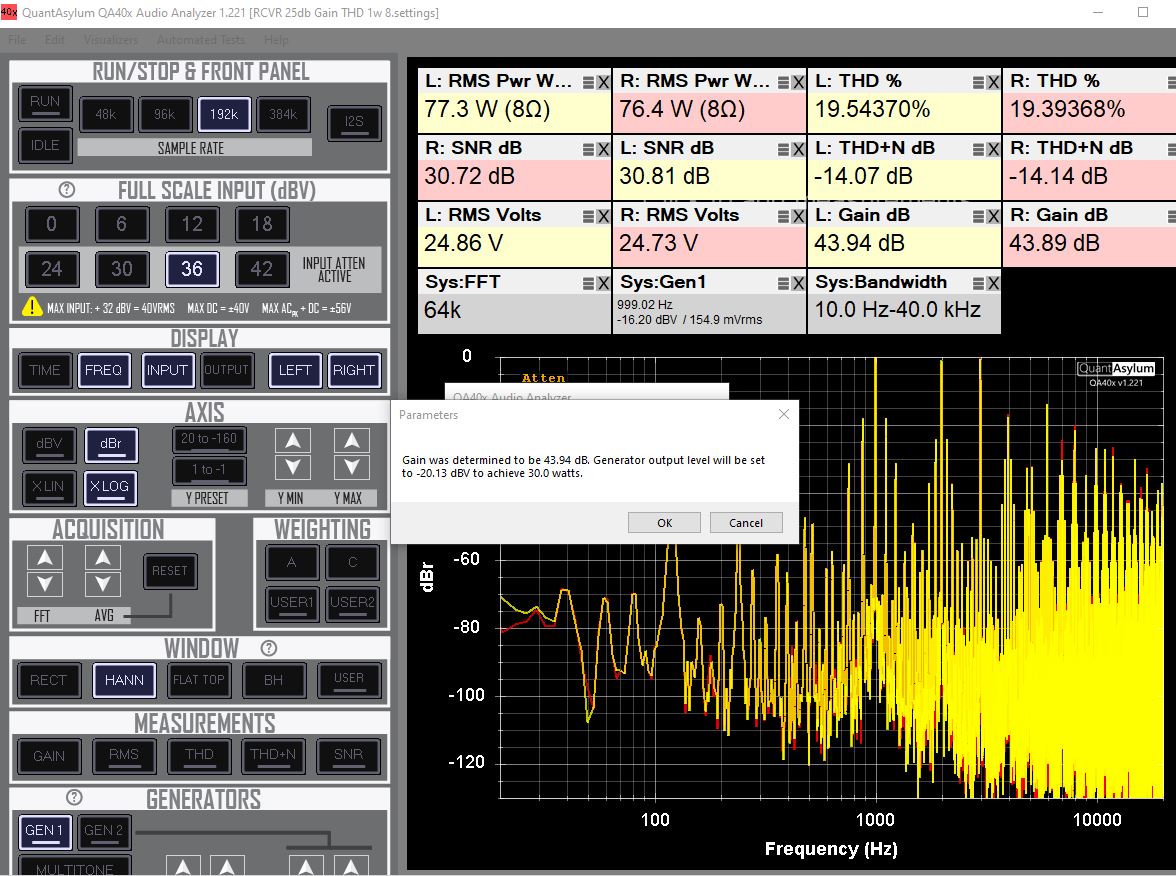
I am doing some testing on a 1969 vintage Kenwood Receiver. Since it has pre out/main in jacks, I decided to test the amp by itself. The receiver is rated at 53w/8ohms at 0.5%THD. I was able to run a THD vs Pwr and Freq test on the receiver as a whole with ok results (up to 40w/8ohms, vol set for 25dB gain). I set the amp up for 30w/8ohms- note that the gain is very high for a power amp- 46dB. Here is that plot:
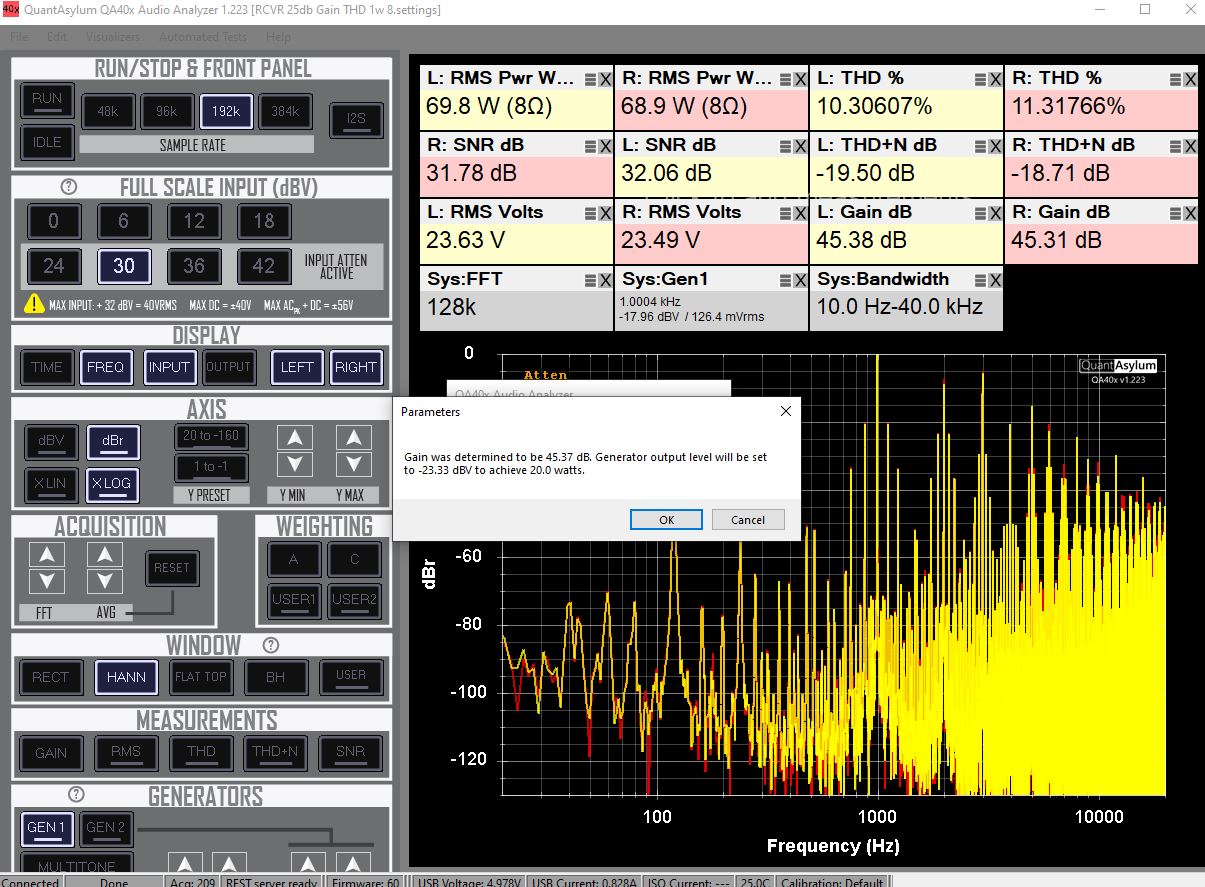
You can see that the gain it calculated is about 3dB less than what it measured previously and so it set the power up 3dB higher, which the Kenwood did not care for. I repeated the process (just the amp section) for 10w and 15w output power levels, no problems- worked as expected. Just starting at 30w… Thoughts?
@restorer-john - As always, thanks for your thoughts on this. I rarely use the Autoset, just make sure I have enough attenuation for what I am running and my experience is that the autotests start out using the settings that you have for the main panel- to a certain extent, anyway. In this instance the attenuation for 36dB was there for the main panel- not sure what this particular test does as far as what level of attenuation it starts at. Right now I have the front panel off to clean the knobs and stuff, but when I get it back together I will try your suggestion and report back.UPDATE- I checked the Autoset Input range using 6dB since I was starting at 36dB (I assume) and it made no difference. It does measure the amp’s gain correctly, but does not set it correctly based on how I set it manually…
@restorer-john I am not sure why I am not usually using the latest release, but will do so a bit later today and post if it makes a difference. I will have the receiver for a few mores days before the owner picks it up. Interesting (to me) that the preamp section has a max gain of maybe -10dB and the amp is 47dB, not the norm for stuff I’ve looked at.
which shows a starting point about 1dB higher than what I show it to require to get about 20w. I assume that it does it measurement at 1khz, but maybe not? This receiver’s frequency response is not flat so if it measured at another frequency that could explain the problem, but it is not bad enough to cause the unit to put out 70w when shooting for 20w…
The various gain calculations appear to be all correct even taking into account the impedance so I don’t see a problem there.
If you do a loop back test to determine gain in that automated test it comes back fine using SE connections. Are you using SE in and out or a mix of SE out and Differential in?
I’ll keep investigating as it’s a bit of a head scratcher.
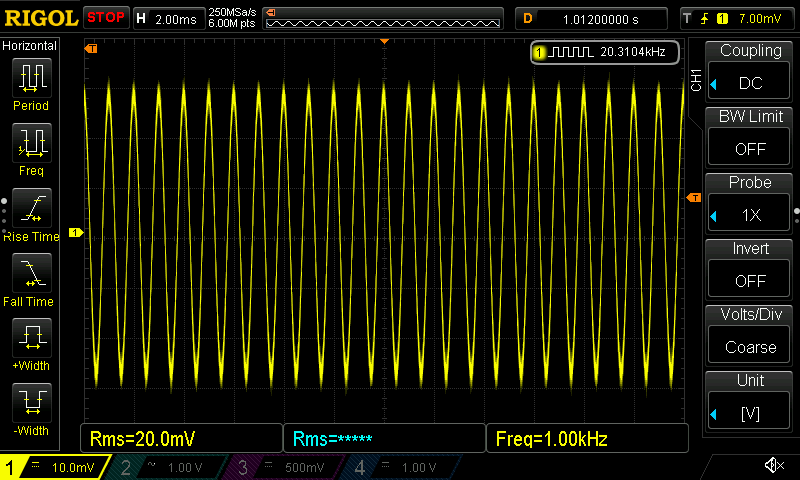
@restorer-john- thanks for looking at this some more. I am using SE in and out- no balanced stuff on this old Kenwood, which my friend picked up sooner than I expected. I am guessing it starts out at some small level ( 20mv @1khz) and increases until it hits the power you are asking for. If you look at the 20w example, it shows 46.38dB of gain for the left channel, with a -24.24dBV input signal, you would get what the QA is measuring, 20.4w. But in the automated test, while showing the correct gain of 45.37dB, it wants to set the output level to -23.33dBV, which gives 20w. But for some reason the plot is showing it being set to-17.96dBV at 1khz, and overloading it- according to the plot. If I actually let the test run with it set at 20w it looks ok for vintage gear. The 30w calculation looks correct, but things fall apart. Maybe I am looking at the plot where the receiver is looking like crap at around 70w or so when you asked it for to be 30w (still wonder why it would do that) and “freaking out” and wasting some of your time. I just looked at the plot again and I was able to do it at 40w with a bit more than 1% thd (its spec is 0.5%)- If it were Aprils fools I would have an excuse, I suppose.